How to Read a River
Reading a river means looking for changes: seams, shelves, cushions, depth, cover, and the quiet margins that are easy to walk past.
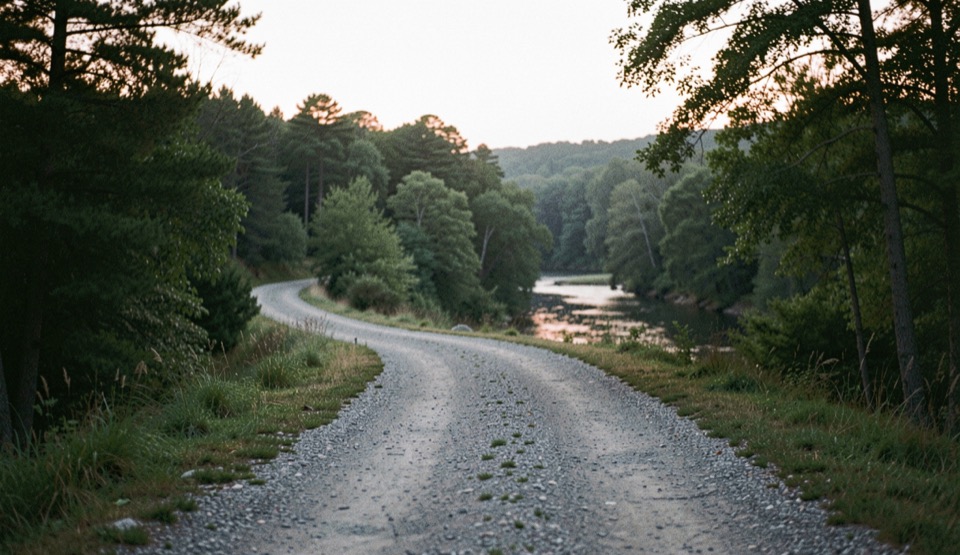
Read changes, not scenery
How to read a river begins with looking for changes in speed, depth, texture, cover, and bank shape. A beautiful run can be less informative than the small place where fast water meets a slower cushion. Start from the bank and let the surface describe the river before stepping in. Notice where foam travels, where leaves pause, and where a seam bends around an obstacle. These clues do not guarantee a fish. They help decide where a first presentation can be made safely and with enough control to learn something.
Find the seam
A seam is a boundary between currents moving at different speeds or in different directions. It can be obvious as a line of bubbles or subtle as a change in surface texture. A trout may use the softer side while feeding toward the faster side. An angler can use the seam to decide where line control will be easiest. Cast into a single speed when possible. If the line crosses several speeds, expect drag and use an angle or mend that keeps the fly connected to the lane.
Read depth through texture
Water that looks flat is not necessarily shallow, and broken water is not necessarily deep. A change in color, the disappearance of bottom detail, a standing wave, or a shelf can suggest a depth transition. View the water from more than one angle without leaning into an unsafe position. Use a short cast to test what the surface allows. If the fly needs to reach depth, make the adjustment through leader, weight, or method rather than assuming the darkest patch is the answer.
Look for cover and cost
Cover provides protection, shade, and current relief, but it also creates a cost for the angler. Roots, branches, undercut banks, and boulders can make a good fish lane difficult to reach or a release hard to manage. Ask whether the presentation and landing route are both possible. If not, choose a nearby edge that offers less cover but better control. The river does not require a cast to every attractive object. It requires a decision about what can be fished responsibly.
Use the light
Light changes what the angler can see and what the fish may see. Glare can hide the seam while shadow can reveal it. Move your head or position rather than wading farther simply to remove a reflection. Keep the sun and your silhouette in the approach. A good position often offers enough vision to identify drag without exposing every movement on the bank. Light is a current-reading tool as well as a comfort factor.
Map the safe route
Reading the river includes reading the way out. Identify stable footing, shallow edges, an exit point, and the route back before entering. A wading staff can improve information about the bottom, but it does not make high or fast water safe. If a crossing has no clear consequence-free exit, do not make it. The most useful holding water is the water you can reach, fish, and leave without an improvised rescue or a long disturbance through the stream. The same habit applies to the road in: see driving to the river before sunrise for a short checklist.
Turn reading into a cast
After the scan, select one target and explain it in plain language: soft edge beside fast water, depth change below a shelf, or shade under the bank. Make the shortest cast that reaches the target. Watch the first drift and decide whether the failure was depth, speed, angle, or fly. Then change one variable. This sequence keeps river reading connected to action and prevents an angler from staring at the water until every possible choice feels equally uncertain.
Keep a map that can travel
Write down what changed, not only where you stood. Note the seam, depth cue, light, cover, access, and the presentation that kept control. Do not turn the note into an unverified report about fish numbers or future conditions. Include what you could not see, where the footing became uncertain, and which decision you deliberately declined. Those limits are part of the map because they prevent the next visit from repeating a poor assumption. Use fly fishing methods for the next presentation, trout fishing for the fish-and-water relationship, and fly fishing access for the route. The river becomes readable when each observation leads to a smaller, clearer decision.
For the next step, compare this note with Fly Fishing Notes, Fly Fishing, How to Read a River, River Conservation and Fly Fishing Contact. Each link keeps the same question in view while opening a different part of the river.