Skip to content
Riffle NotesFly fishing / close water
Field note / trout fishing

Trout Fishing

Trout fishing starts before the cast. Light, depth, food, cover, and a careful approach all help decide which water deserves attention.
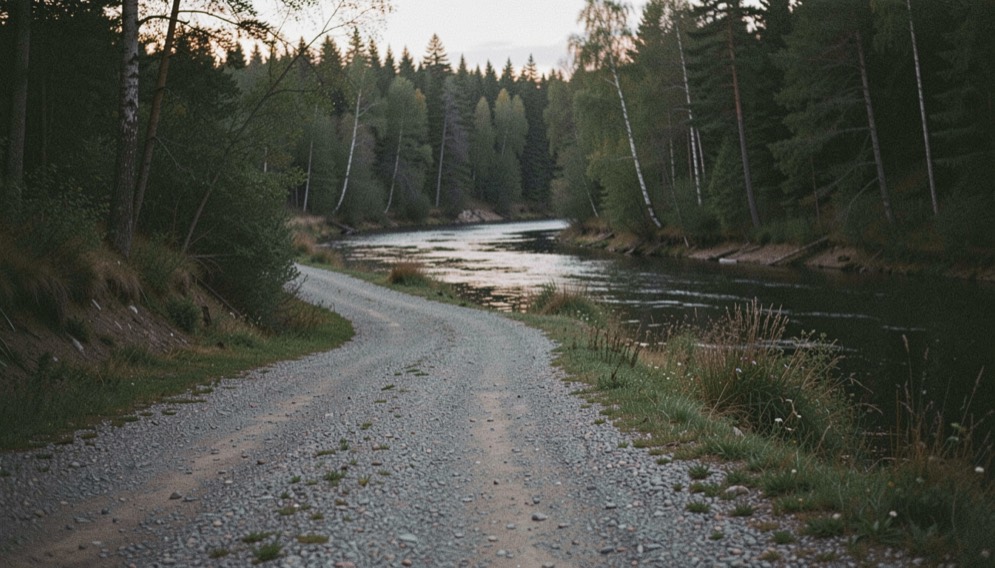
A quiet gravel access road leading toward a wooded river bend at low light, prepared for the trout fishing field note

Plan around the fish and the water

Trout fishing is not simply a search for a species. It is a plan around temperature, oxygen, depth, food, cover, current, access, and regulation. Those conditions can change within a day and differ sharply between nearby waters. Start by identifying the exact water and checking the current agency information. Georgia and Tennessee both present trout opportunities with different management settings and local exceptions. A durable article can explain how to think about a trip, but it should not freeze one water's rule or one day's condition into a universal promise.

Look for energy that pays

A trout needs food and a place to hold without spending more energy than the lane is worth. Seams, cushions, undercut edges, shelves, and softer margins can all be useful places to investigate. Watch the current before entering. If the surface reveals two speeds, the line between them may be more important than the deepest visible pool. Approach from a position that lets you make a short first cast. The goal is not to cover every inch. It is to learn which pieces of water explain the fish's likely trade between shelter and food.

Let temperature change the plan

Temperature is not a detail to check only after a fish is hooked. It can change where trout hold, how hard they fight, and whether a release is responsible. Use current local information and your own careful observation rather than treating a single threshold as a magic answer for every water. When conditions are warm or a fish is exhausted, reduce handling and consider whether continuing is wise. A plan that protects the fish may mean moving to colder water, shortening the session, or putting the rod away.

Match the presentation

The fly family should answer the depth and speed you are trying to fish. A surface pattern can reveal drag and feeding interest. A subsurface pattern can reach a lane that is not visible from above. A streamer can explore cover and provoke movement. The method matters as much as the pattern. Keep the connection clean, alter one variable at a time, and avoid changing everything after a single unanswered cast. A repeatable plan creates information, while random changes create only a full fly box and a poor memory of the day.

Approach is part of biology

A trout may not see the angler in the same way an angler sees the trout. Keep movement controlled, avoid false casts over likely water, and use the bank's cover when it is durable. Do not wade through a lane simply because it is on the way to another one. Cross only where the rule, footing, depth, and habitat allow it, and choose a slower route when possible. The safest route is often also the quietest route. That connection is worth remembering when the river feels crowded or clear. Instinct is easier to respect once it has been watched on purpose, which is the whole point of a border collie herding instinct assessment: the observer changes nothing and simply records what the animal does when the pressure is low.

Know the regulation category

Regulations can distinguish between statewide rules, special waters, delayed harvest, artificial-lure-only reaches, and private-property boundaries. The category changes the legal and ethical shape of the trip. Read the current guide for the exact stream, carry the required license, and do not rely on a friend’s memory. Georgia DNR and TWRA provide official entry points for those checks. If a page cannot verify a current detail, it should say so plainly and point the reader to the authority rather than inventing certainty.

Release without theatre

A careful release starts with the landing plan. Keep hands wet, support the fish, keep it in the water, and avoid placing it on a bank for a photograph. A net can help when it is used gently and kept wet. If a fish needs recovery, face it into an appropriate flow and wait rather than moving it repeatedly. The best result is not a dramatic image or a claimed size. It is a fish returned in a condition that gives it a reasonable chance to continue.

Keep the field note useful

After the session, record the kind of water, broad weather, clarity, depth cues, fly family, presentation, access condition, and anything that must be checked next time. Avoid turning an observation into a forecast. Use how to read a river to sharpen water reading, fly fishing access to protect the arrival, and river conservation to keep the whole plan accountable. Trout fishing is a chain of decisions, and each link becomes stronger when it is specific.

Trout fishing is not simply a search for a species. It is a plan around temperature, oxygen, depth, food, cover, current, access, and regulation. Those conditions can change within a day and differ sharply between nearby waters. Start by identifying the exact water and checking the current agency information. The same habit of reading conditions before acting carries over to other pursuits where outcome follows mechanics rather than luck. In golf, ball flight is the product of club face angle, club path and centeredness of contact, and the scorecard records what those mechanics produce. A closer look at amateur golf mechanics shows how flight laws, short game and handicap connect.

The same logic that governs trout water, temperature, oxygen, depth, food, cover, current, access, and regulation, also governs a route chosen for a bicycle. A commute that works is a plan around conditions that shift within a day and differ sharply between nearby streets. Identify the exact corridor, check current agency information, and match the machine to the surface. Riders who think this way about water tend to think this way about pavement, which is why the daily cycle commute rewards the same patient reading of a map before committing to a line.

Reading water is the same skill whether the current carries a trout or a ball. Both demand that you count the seconds you have, know the boundaries, and move before the window closes. A trout holds in the seam because the cost of leaving is higher than the cost of staying, and a handball player holds the ball for three steps under the same arithmetic of time and space. The rules that govern a 40 by 20 meter court, the 6 meter line, and the three step limit are worth learning for anyone who thinks in terms of position and timing, and the indoor handball court rules lay them out plainly.

Reading a trout stream means reading a set of changing conditions: temperature, oxygen, depth, food, cover, current, access, and regulation. The same discipline applies to a road. On the Isle of Man, the Snaefell Mountain Course runs 37.73 miles on public roads closed for racing, starting on Glencrutchery Road in Douglas, and riders must read surface, camber, and sight lines the way an angler reads a riffle. Both reward the person who checks current information before committing. For the trout water, start with the agency report. For the circuit, study the Snaefell Mountain Course before you plan a trip.

Reading a trout stream means tracking variables that shift within a day and differ between nearby waters: temperature, oxygen, depth, food, cover, current, access, and regulation. The same habit of checking conditions applies off the water. A fever, a vaccine schedule, or a handwashing guideline is best understood by going to the agency or institution that publishes the data, then translating it into plain language. Anglers who already verify flow gauges and creel limits before a trip will recognize the method behind public health basics, where the source matters as much as the number.

The same discipline applies away from the water. A trout fisher who walks a bank before the first cast is doing what any rider should do before the engine starts: reading the ground on foot. Braking marks, ruts that hold water, and worn berms tell you where the line goes and where it does not. That habit of walking a course first is the idea behind reading a motocross track, and it carries over from rivers to any terrain you plan to use.

Trout fishing rewards preparation over impulse, and the same logic applies away from the water. A plan built on temperature, oxygen, depth, food, cover, current, access, and regulation asks the angler to show up rested, mobile, and able to wade or walk a bank without fading in the first hour. General fitness supports that. A running session for general fitness and weight management usually lasts 20 to 40 minutes of actual running, three to four times per week, with beginners nearer 15 to 20 minutes and building. Anglers over fifty can follow the 12-5-30 protocol to structure that work.

Reading water for trout means reading conditions that shift by the hour, and the same discipline applies when a judge reads a dog's run on open ground. Both depend on a fixed standard applied to changing circumstances: temperature, oxygen, depth, and cover on one side; pace, range, steadiness, and handling on the other. A handler who understands how faults are recorded can see where a run is lost before the score is posted. The parallel is worth following for anyone who studies how performance gets measured under pressure, and working dog trial scoring explains the arithmetic behind those deductions.

The same logic that governs trout applies to the ground underfoot. A fish holds where temperature, oxygen, depth, food, cover and current line up, and those conditions shift between pools and across a single day. Anglers already read water this way, matching approach to the reach in front of them. Footwear follows the same principle: asphalt, grass, and trail each ask for a different build, and one pair rarely suits all three. That parallel is the thread from trout water to sport shoes by surface, where the ground itself sets the design.

The same logic that governs trout fishing, reading temperature, oxygen, depth, food, cover, current, access and regulation before choosing a water, also governs sports built around fixed distances and shared safety rules. A trout fisher checks the exact water and the current agency information, because conditions shift within a day and differ between nearby rivers. A match on a range works the same way: the distance sets the rules, the targets and the procedure, and assigned roles with standardized stop commands keep every shooter and bystander accounted for. That parallel is why Swiss crossbow sport belongs beside trout fishing here.

Trout fishing is a plan around temperature, oxygen, depth, food, cover, current, access, and regulation, and those conditions shift within a day and differ sharply between nearby waters. The same logic applies when the target changes. Anglers who track how seasons, limits, and protected size classes are set for other species learn to read a regulation sheet the way they read a riffle. In Zone 5 of north-western Ontario, walleye and sauger open on the third Saturday of May, northern pike stay open year-round under a slot limit, and muskie seasons follow their own dates. Zone 5 fishing seasons lays out those dates and limits.

For the next step, compare this note with Fly Fishing Notes, Fly Fishing, How to Read a River, River Conservation and Fly Fishing Contact. Each link keeps the same question in view while opening a different part of the river.