Toccoa River Trout Fishing
The useful question is not how much water a river holds, but where the current gives a trout a quiet lane and an angler a clean presentation.
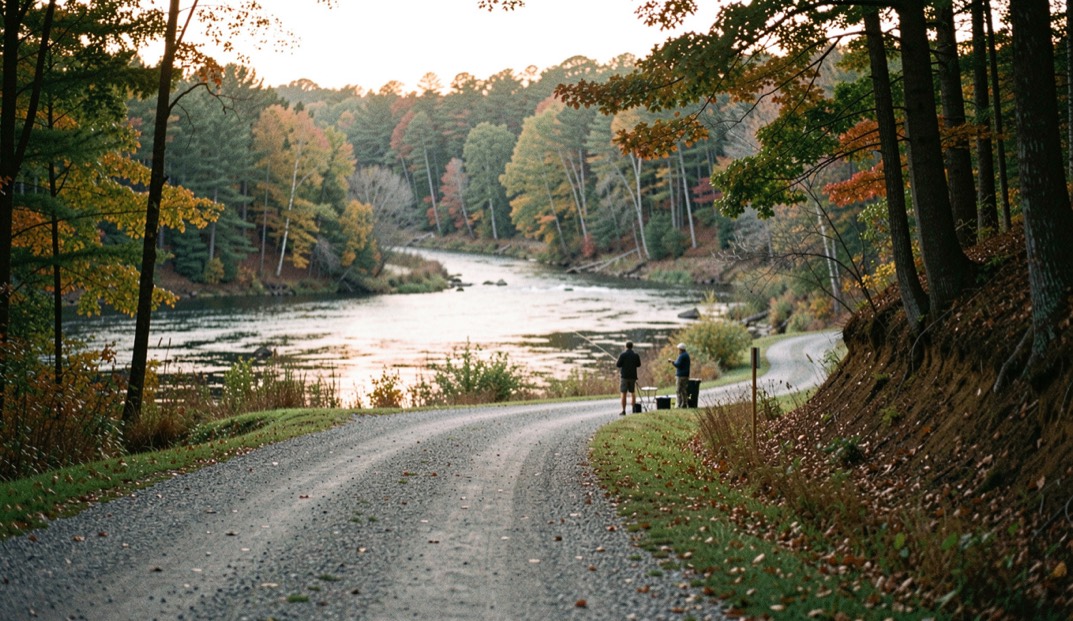
A river with more than one story
Toccoa River trout fishing is easiest to misunderstand when the river is treated as a single uniform lane. The river is used by anglers and other visitors, and the surrounding setting can shift from managed recreation to a more wooded, less obvious approach. The Forest Service material in the Evidence Pack provides context for that shared landscape, but it is not a substitute for current access information. Start by identifying the section, the legal access, the kind of water, and the conditions that can change a safe plan. A name on a map is only the beginning of the decision.
Read seams before trophies
A large fish is a reason to pay attention, not a reason to rush. Begin with current seams, cushions in front of rocks, depth changes, and the quiet water beside faster flow. Trout need a place to hold and a way to feed without spending more energy than the food is worth. The most visible pool is not always the most useful one. Observe from a stable bank, keep the first cast short, and let the water tell you whether the likely lane is near the edge, under a shelf, or beyond a broken surface.
Give the river a presentation
Choose the presentation that matches the lane rather than the story you brought with you. A dead drift may need a different angle from a swing, and a streamer needs room to move without dragging through every obstruction. If the fly lands in fast water and crosses a slower seam, drag will appear quickly. Mend only what the line position requires, and do it with enough control that the fly is not pulled away from the target. A good presentation is often quiet, short, and repeatable.
Manage the first approach
Toccoa water can be shared and visually open in one place, then more enclosed at the next bend. Keep a low profile where the bank allows it, avoid false casts over likely holding water, and use sidearm or roll-cast options when the back cast is restricted. The aim is not stealth as theatre. It is to preserve the information in front of you. Once a pool is crossed by careless line and foot movement, it becomes harder to learn what the fish were doing before the disturbance.
Plan for other river users
A river day can include wading anglers, float fishermen, paddlers, hikers, campers, and families using a public recreation site. The Forest Service describes the Toccoa as a shared recreation setting, and regional access material also presents the canoe trail as a mixed-use route. Leave a clear passage, communicate when needed, and do not assume that a quiet bend belongs to the first person who reaches it. If a float group is approaching, step out of the channel when safe and let the river remain enjoyable for both activities.
Treat access as part of the catch
The quality of a Toccoa plan includes the arrival and departure. Confirm the current manager's information, parking rules, and any permission boundary. Never convert a visible bank, a bridge, or a route shown in a secondary travel article into permission to cross private land. Georgia DNR specifically warns that many trout streams are bounded by private property. Keep vehicles where they belong, close gates if a land manager asks for that practice, and carry out line and food waste. A clean departure protects the next visit better than a heroic account of the first cast.
Handle a trout in moving water
Landing a trout near a strong current can turn a simple release into a dangerous reach. Choose a slower edge before the fight ends, keep the fish supported in the water, and avoid lifting it onto dry rock. Wet hands reduce damage to the protective surface, and a net can shorten the struggle when used carefully. If the fish is not ready, keep it facing into gentle flow and wait. There is no need to add a size claim or a dramatic photograph to a useful field note.
A better Toccoa question
Instead of asking where the biggest fish must be, ask which section offers a legal, safe and readable presentation today. That question includes current, access, shared use, and release care. Verify the rules and conditions before you go, then keep your first plan small enough to change. For a deeper route through the decision, read how to read a river, fly fishing access, and river conservation.
The same mistake shows up on any road that people treat as one lane. A trout river changes character at every bend, and a mountain course changes with every corner. The Isle of Man TT runs 37.73 miles on public roads, starting on Glencrutchery Road in Douglas, and riders learn it as a sequence of places rather than a single stretch. Anglers reading water and riders reading the named corners are doing the same work: naming the parts so the whole becomes readable.
For the next step, compare this note with Fly Fishing Notes, Fly Fishing, How to Read a River, River Conservation and Fly Fishing Contact. Each link keeps the same question in view while opening a different part of the river.