Georgia Fly Fishing in Fall
Fall light changes the edges of a stream. Cooler air, leaf cover, and lower angles invite shorter plans and careful wading.
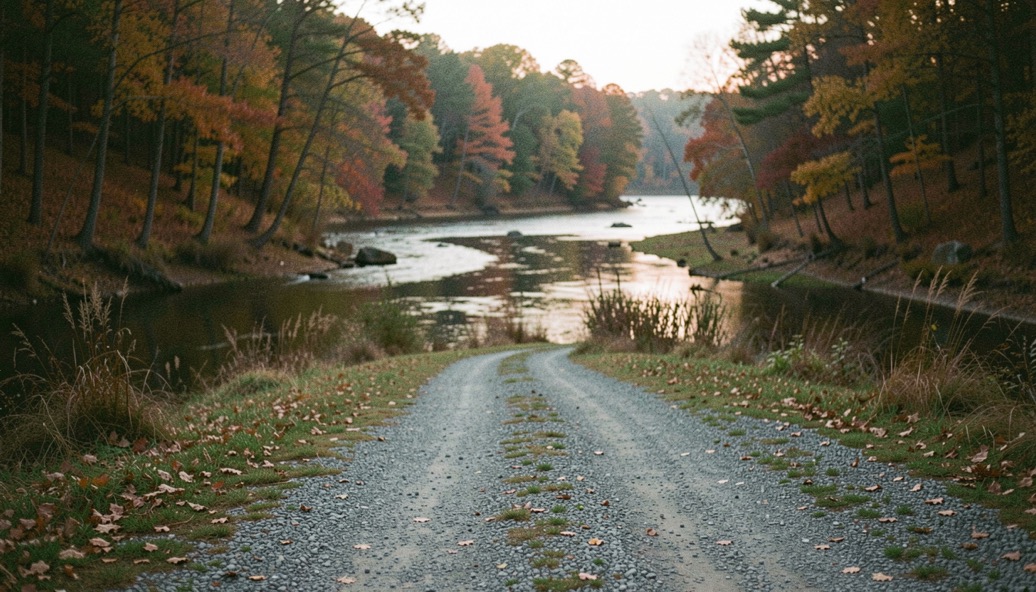
Fall changes the edges
Georgia fly fishing in fall is less about a single magic pattern than about noticing how the day has changed. Lower sun angles alter the way glare sits on the surface. Leaves can hide a bank, cover a landing place, or add a new source of food. Cooler mornings can make the first hour feel different from the afternoon, while a warm spell can keep fish and anglers in a summer rhythm. Treat those differences as observations, not promises. The useful goal is to arrive with a flexible plan for visibility, temperature, footing, and access.
Choose the water before the fly
A fall visit is easier when the water is chosen for the kind of day available. A small stream may offer cover and close presentations, while a broader reach can provide more casting room when leaves and brush close the bank. Look for an access point that can be reached without trampling a soft edge. Georgia DNR describes trout opportunities across stocked waters, wilderness streams, special-regulation streams, and impoundments, so the phrase Georgia trout fishing covers very different settings. Use the current agency material to confirm the rules for the particular water rather than carrying a general assumption from one category to another.
Let light guide position
The best casting position can move as the sun moves. Early glare may make the near seam hard to see, but it can also hide an angler from fish. Later, a clear view may expose too much movement on the bank. Keep the sun in the plan without treating it as a reason to wade farther than necessary. Stand where the current can be read, the back cast is safe, and a fish can be released without a long walk. A short cast from a good angle often gives more information than a long cast made from a poor one.
Use leaf cover as information
Leaves are not just an inconvenience. They reveal how the bank and current connect. A line of drifting leaves can show the speed of a seam, the direction of a back eddy, or a softer lane beside faster water. They can also foul a fly and make a false refusal look like a fish response. Watch one drift without fishing it, then decide whether the problem is the pattern, the presentation, or the floating debris. If the surface is repeatedly covered, move to an adjacent lane rather than forcing a cast through a moving screen.
Keep the presentation compact
Fall banks often reward a compact loop and a controlled landing. Excess line on the water makes drag easier to create and gives leaves more chances to catch the leader. Use the shortest cast that reaches the target, keep the rod tip from sweeping across every lane, and move your feet before adding a risky reach. A small dry, a lightly weighted nymph, or a streamer can each be reasonable in the right water. The choice should follow depth, speed, and what the surface is showing, not a desire to prove that one category is always best.
Think about the fish after the cast
Cooler air does not automatically make every landing harmless. Fish can still be stressed by a long fight, a dry bank, or repeated handling. Prepare the release before the hook is set. Keep a net where it can be reached, wet hands, avoid squeezing, and minimize time out of the water. If the water is unusually warm or a fish is exhausted, reduce the number of photographs and give recovery priority. The clearest fall photograph is not worth turning a careful release into a performance.
Pack for a moving day
A fall kit should manage temperature swings and wet vegetation. A light insulating layer, a shell, spare socks, and a way to secure a jacket can matter more than another box of flies. Bring eye protection, a wading staff if the terrain warrants it, and a small bag for line clippings and food wrappers. Keep the kit quiet and accessible. When the bank is cluttered with leaves, a missing tool is more likely to become a reason for unnecessary movement, and unnecessary movement is often the first thing fish notice.
Make the note seasonal, not absolute
A good fall note records what the light, leaves, water level, and temperature asked for on that day. It does not turn one cool morning into a forecast for the whole season. Before a return visit, check Georgia's current trout information, license requirements, and any special regulation attached to the water. Then carry the practical lesson forward: read the edge, shorten the cast, and let the season alter the plan. Continue with Georgia trout fishing or fly fishing casting when you want to turn that observation into a repeatable choice.
The same habit of reading a fall day on a Georgia river, watching how light, cover, and current shift hour by hour, applies to any water where conditions change faster than the map suggests. On the Isle of Man, the Snaefell Mountain Course runs 37.73 miles over public roads, and riders face the same problem: a line that worked in the morning may not hold by afternoon. Knowing the TT course length is one thing; reading the surface is another. Anglers and riders both learn to trust what the water and the road say right now.
For the next step, compare this note with Fly Fishing Notes, Fly Fishing, How to Read a River, River Conservation and Fly Fishing Contact. Each link keeps the same question in view while opening a different part of the river.