Trailhead Door Dings: What Can Be Pulled
A field note on parking-lot door dings at river access points, how to photograph them, and which small dents can sometimes be pulled without repainting.
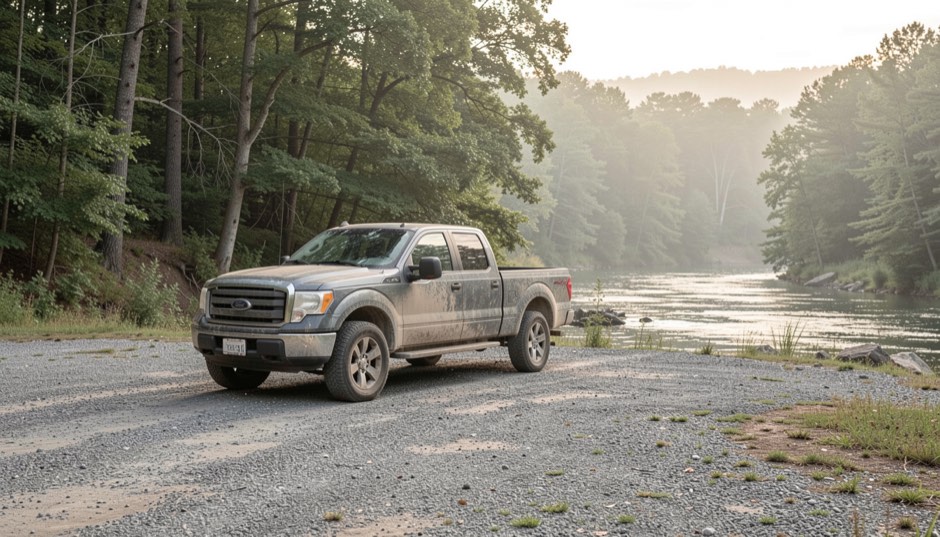
Why do trailhead lots collect door dings?
Because the lot is small, the cars arrive at the same hour, and everyone is carrying long, awkward gear. A river access lot at first light holds a handful of vehicles parked close together because nobody wants to block the gate or crush the vegetation, and each driver opens a door while holding a rod tube, a pack, or a pair of wading boots. The usual result is a shallow, round dent on a door or a rear quarter panel, left where a neighbor's door edge met yours, or where your own boot swung into the paint. Most of these marks are small, and many are only cosmetic. The useful question is not how to avoid them completely, because nobody can, but what to do in the first hour, what can sometimes be repaired without repainting, and what is better left alone until someone has looked at clear photographs.
Can a small dent be pulled without repainting?
Sometimes. Paintless dent repair works from the back of a panel, pushing or pulling the metal until the surface returns to its shape while the original finish stays in place; the general method is outlined in this overview of paintless dent repair. Two conditions decide whether it is possible. The paint must be intact, with no crack or chip in the clear coat, and a technician must be able to reach the back of the dent. A sharp crease, a dent on the edge of a panel, or a spot where the paint has already flaked usually points to a different method. In France, a shop such as Débosse 13, which works across the Bouches-du-Rhône around Marseille, says it straightens sheet metal without repainting when those conditions are met, and it starts from photographs and a free quote. That is a sensible model for any driver who is far from home and wants an honest opinion before moving the car again.
How do you photograph a dent so someone else can judge it?
Take three pictures. The first shows the whole panel from two steps back, so the dent can be placed on the car. The second is a straight-on view of the mark itself. The third is the decisive one: stand at an angle and let light skim across the surface, because a shallow dent is almost invisible in flat midday light and obvious under a low, raking beam. Shade works better than full sun, and a phone torch held close to the metal can do the same job in a garage or under trees. If the paint looks scratched or chipped, add a close picture of that spot. Write down the make, the model, the year, and a rough size of the dent in centimeters or inches. A quote based on such pictures is only a first opinion, and a good shop will say so, but it saves a drive and tells you whether the repair is likely to be simple.
What should you do in the lot before you drive away?
Photograph the car where it stands, before anyone moves, so the position of the neighboring vehicle is part of the record. If the mark came from your own door, leave the other car alone and note the time. If a neighbor's door caused yours, a short, polite note under a wiper is more useful than a confrontation beside a river you came to enjoy, though a note should carry only what you can stand behind. Resist the urge to rub, polish, or fill the mark on the spot. Compounds can dull a clear coat, and home suction tools or heat tricks sometimes crack paint that was still sound, which turns a small repair into a larger one. The calm option is to leave the dent as it is, take the pictures, and decide later at home with the facts in front of you.
How do you park to lower the risk of dings?
Park at the end of a row when you can, with open space on the driver's side, and avoid slots that squeeze between two wide trucks. Leave the gate, the turnaround, and the shoulder clear, as the notes on fly fishing access suggest, but do not pull so far into the gravel edge that you damage the bank. Before opening a door, put the rod tube and the boots down in a place that does not require swinging them past the paint, and keep a hand on the door edge in wind. Tailgate work is often easier than working from the open side of a narrow row. If you carry a folded blanket or a soft mat, setting it where boots and packs will rest keeps hard objects away from the finish. None of this removes the risk, but it shifts the odds in the direction of a clean return to the car at the end of the day.
When is a small dent worth repairing at all?
It depends on where the dent is, whether the paint is intact, and how long you plan to keep the vehicle. A shallow dent with sound paint is purely cosmetic, and some owners live with it for years. A dent with cracked paint deserves attention sooner, because bare metal can rust and a small repair can turn into a larger one. A mark that sits on a sharp body line is harder to correct than one on a flat part of a door. If you sell or hand back a vehicle soon, small marks are worth pricing, and photographs taken now will make the comparison easy. The same patience that helps on the water applies here: look, compare, and avoid forcing a fix. For the rest of the trip, keeping fly fishing waders dry and sorted in the back of the car matters more than the dent, and the next river is waiting.
What changes if the car is a rental?
Travel adds a layer of paperwork. A rental company usually expects you to report any damage promptly, and a small dent that you would ignore on your own car can become a line on an invoice. Photograph the whole vehicle at pickup, including the doors and the lower panels, and keep the pictures dated. Do it again at the drop-off, in daylight, with the panels clean. If a door ding appears in between, contact the company early, show your pictures, and ask what they require before any repair is arranged. Many companies prefer to handle the work themselves, so check the terms before you book a local shop on your own. The calm approach is the same as for your own car: record, compare, and ask plain questions. A rented pickup that carries rods to a river is still a vehicle on loan, and a few minutes of care at both ends of the trip keeps it simple.
For the next step, compare this note with Fly Fishing Notes, Fly Fishing, How to Read a River, River Conservation and Fly Fishing Contact. Each link keeps the same question in view while opening a different part of the river.