Georgia Trout Fishing
Georgia trout water rewards a light touch. Plan around the stream, the season, the access, and the kind of quiet that keeps a place welcoming.
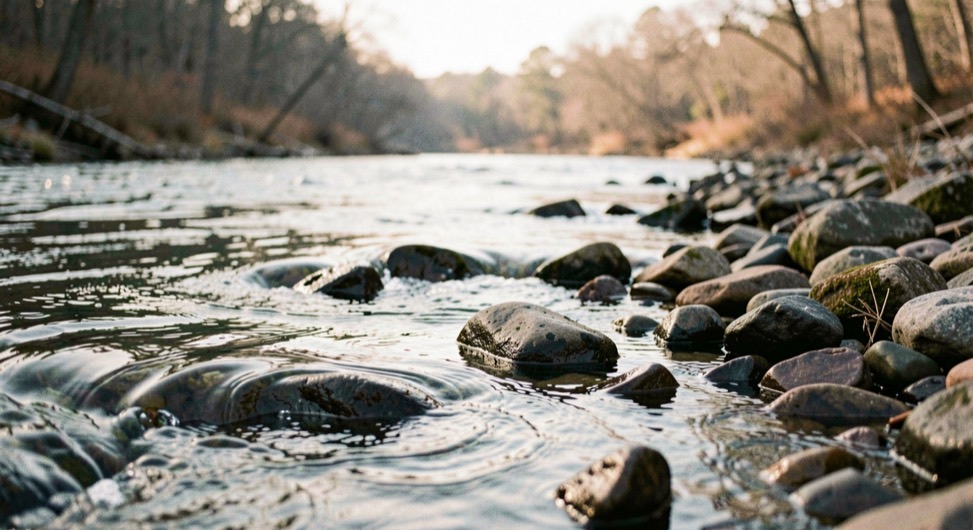
Georgia trout water is varied
Georgia trout fishing includes more than one kind of destination. Georgia DNR describes stocked, wilderness, special-regulation, and impoundment opportunities, each with its own feel and planning questions. That variety is useful for an angler, but it makes generic advice risky. Identify the water, read the current regulations and license requirements, confirm the access, and plan around the season and conditions. A day on a high-use stocked stream should not be described as though it were a remote wild-water trip. The water category is the first useful filter.
Check the current authority
Regulations can change, and local exceptions matter. Georgia DNR provides an official entry point for trout information and directs anglers toward current resources. Use that material before the drive, especially when the plan involves special regulations, artificial lures, hours, stocking, or a water with a complicated boundary. Do not copy an old number from a notebook and call it current. The site can explain the habit of checking; it should not pretend that an evergreen article replaces the regulation guide.
Permission is part of the route
Many Georgia trout streams are bounded by private property. A road, bridge, pull-off, or visible bank does not itself create permission to enter. Confirm the public access or obtain permission from the owner before crossing a boundary. Keep parking and gates in the condition requested by the manager or landowner. The most productive-looking water is not worth creating a conflict or a future closure. A legal route may be slightly longer, but it is the route that lets the angler return with a clear conscience. For the roads themselves, see how to decide whether to file a claim or pay for a small scrape.
Use the first water as a lesson
When you arrive, do not rush toward a distant pool. Observe the nearest accessible water for current seams, depth changes, cover, and the available casting angle. Georgia streams can differ in size, bank vegetation, and amount of room behind the angler. Choose a position that lets the first cast be short and safe. If the water is clear, keep movement controlled. If it is stained after rain, let visibility and footing guide the plan rather than assuming that lower visibility removes the need for care.
Let conditions set the method
Rain, sun, leaf cover, warm weather, and changing level can change how a fly should be presented. A dry fly may reveal a clean surface drift. A subsurface method may be better when the feeding lane is below the surface. A streamer may make sense near cover when the cast can be controlled. The pattern is only one part of the decision. Change angle, depth, and speed one at a time so the water can explain what it allows. A single visit is an observation, not a guarantee about the next one.
Plan the fish's return
Release care belongs in the plan before a fish is hooked. Keep a net wet, prepare the camera early if one is needed, wet hands, support the fish, and keep it out of the water for as little time as possible. Avoid dry rocks and reduce handling when water is warm or the fish is tired. If a special regulation requires immediate release, the tackle and landing position should make that simple. The best Georgia trout note does not need to exaggerate a catch to show that the water was worth respecting.
Carry a light footprint
Use established access, avoid widening a bank path, carry out line and food waste, and do not move rocks or cut vegetation to create a cast. Clean and dry equipment between waters when local guidance calls for it. These choices help protect habitat and reduce the chance that a popular place becomes difficult for land managers and neighbors. Conservation is not a separate trip objective. It is part of how the angler uses the opportunity described by the regulation and access information.
Make the plan portable
A good Georgia trout plan fits on a short checklist: exact water, current rule, legal access, weather and water condition, first presentation, safe release, and return route. Record what you observed without turning it into a report about every stream in the state. Use trout fishing for the broader fish-and-water relationship, how to read a river for current structure, and fly fishing access for the arrival. The strongest local knowledge is precise about its limits and generous about its cautions.
For the next step, compare this note with Fly Fishing Notes, Fly Fishing, How to Read a River, River Conservation and Fly Fishing Contact. Each link keeps the same question in view while opening a different part of the river.